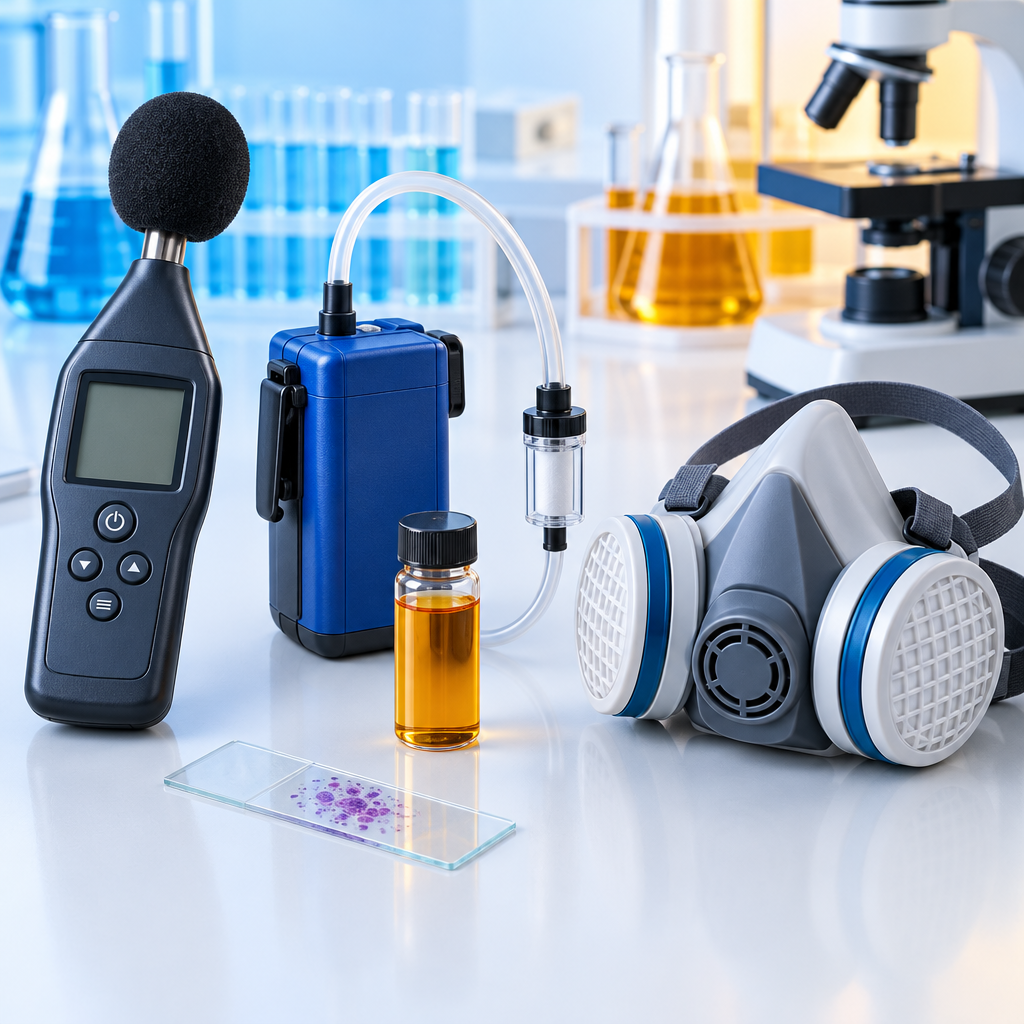
The course Occupational Diseases and Risk Agents addresses the identification, classification, and prevention of diseases related to the work environment, focusing on physical, chemical, and biological risks. Physical risks involve forms of energy present in the environment, such as noise above 85 dB(A), which causes Noise-Induced Hearing Loss (NIHL); vibrations, which may lead to low back pain and Raynaud’s Syndrome; extreme temperatures; and radiation. Chemical risks include dusts, gases, vapors, and fumes that enter the body mainly through the respiratory tract or skin, causing serious diseases such as pneumoconioses, including silicosis; heavy metal poisoning, such as lead poisoning; and occupational dermatoses. Biological risks involve exposure to microorganisms found in hospitals, rural areas, slaughterhouses, and sewage treatment plants.
Brazilian legislation distinguishes between occupational disease, also known as a typical occupational disease, caused directly by the work activity and with a presumed causal link, such as silicosis in miners, and work-related disease, or atypical occupational disease, resulting from the environmental conditions in which the job is performed, such as hearing loss in a forklift operator due to warehouse noise. To ensure social security rights, it is necessary to prove the causal link, using tools such as the Technical Epidemiological Social Security Nexus (NTEP). Degenerative diseases, endemic diseases without a direct relationship to the work activity, or conditions inherent to the worker’s age are excluded from the concept of work-related disease.
The prevention and control of occupational diseases depend on structured and integrated actions. Issuing the Work Accident Report (CAT) is mandatory, ensuring rights equivalent to those related to typical accidents. The hierarchy of controls prioritizes the elimination or substitution of the harmful agent, followed by engineering controls, such as gas exhaust systems and noise enclosure; administrative controls, such as job rotation; and, as the last barrier, the use of Personal Protective Equipment (PPE). Continuous medical monitoring through the Occupational Health Medical Control Program (PCMSO) enables the early detection of changes, protecting workers’ health and mitigating the progression of occupational diseases.